How is preschool language related to later reading?
Since 2019, researchers from the Ladder Lab (at both the Deafness, Cognition and Language Research Centre (DCAL) and City, University of London) have been conducting a large-scale longitudinal research study called the “Preschool Language and Literacy” study. We aim to understand how preschool language and emerging literacy skills are related to later reading ability.

Why is this research important?
Some hearing children and many deaf children find learning to read challenging. It is therefore important to identify children who may struggle with reading BEFORE they start learning to read. Early identification will help ensure that children who need it have appropriate support as they begin learning to read.
What have we been doing in this study?
We have been conducting a three year, multi-wave, longitudinal study following 235 children from preschool (age 3-4yrs) through to the end of year two (age 6-7 yrs). We see the children every twelve months in preschool, reception, year 1 and year 2. Across the different waves of the study, we have 113 hearing children and 122 deaf children who use spoken language (and some are bilingual-bimodal BSL-English). It is an inclusive sample and approximately 30% of the children are exposed to another spoken language at home.
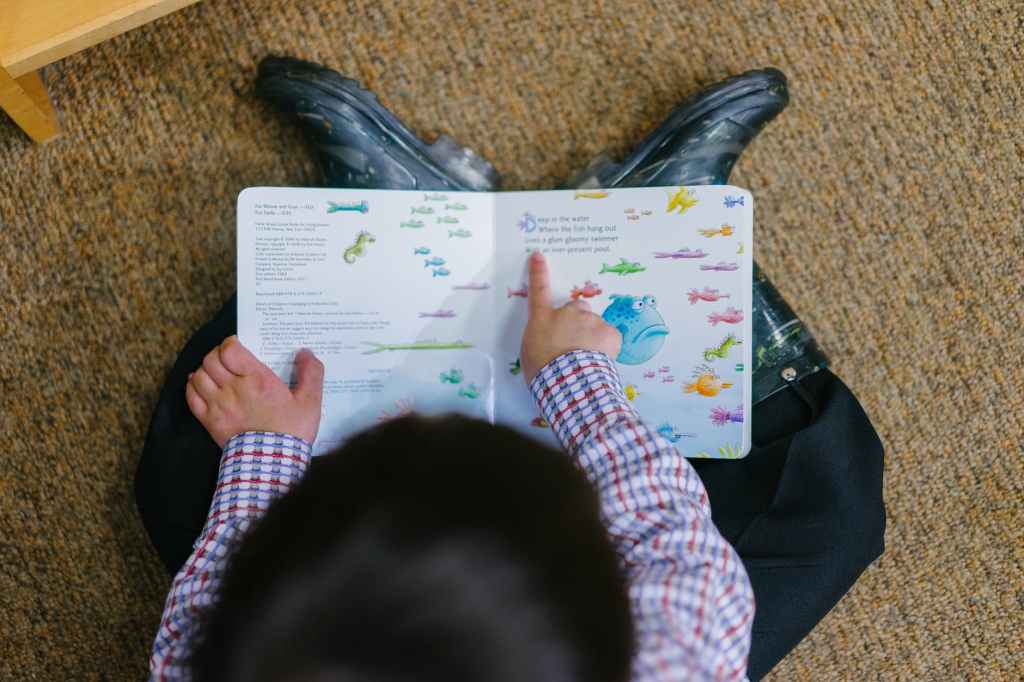
Children are seen either at school or at home and complete a set tasks assessing their language and literacy skills including vocabulary, letter sound knowledge, conceptual print knowledge (where do you start reading in a book? what does a book title tell us?) phonological awareness, English grammar and syntax, reading, and spelling ability.
what have we found?
We are still visiting children in schools and following up the youngest wave of children until 2026. We are currently analysing data and we will be able to post some findings shortly!

The project is being run by Dr Fiona Kyle, Prof Ros Herman and Dr Katie Mason. It is funded by a Heather van der Lely Foundation grant awarded to Dr Kyle and Prof Herman.
 The Ladder Lab